


Zoo 2: Animal Park
4.011.86K Reviews
App Specs
- Version
- 15.4.0
- Updated On
- License
- Free
- Downloads
- 10,000,000+
- Developer
- upjers GmbH
- Categories
- Adventure
- Platform
- Android, iOS
Screenshots
 Analysis by AppCompare
Ever fancied becoming the next great zoo director? Well, Zoo 2: Animal Park offers a delightful escape into the world of wildlife management right from your smartphone. I’ve spent some time caring for adorable animals, and let me tell you, it’s been quite the adventure!
Before You Settle In
It helps to know what kind of game you are opening before you commit to a long session. Zoo 2: Animal Park is a free adventure game from upjers GmbH, built around looking after a zoo and working through quests. That makes it a better fit for players who enjoy a gentle mix of planning and decoration than for anyone looking for a fast-paced adventure with a clear finish line.
The game is listed for Everyone and has an average rating of 4.0 from around 297,000 ratings, with more than 10 million installs. Those figures suggest a broad audience, but they do not tell you whether its unhurried rhythm will suit you personally. I’d think of it as something to dip into regularly: a place to make gradual progress, rather than a game that needs to be completed in a weekend.
One practical point is the cost. There is no purchase price to start, but optional in-app purchases range from $0.99 to $274.99 per item. I would go in expecting to make decisions about how quickly I want to progress, not assuming that every route through the game will feel equally convenient without spending. If you prefer games with no in-app purchases at all, this may not be your ideal choice.
Getting Started in the Wild
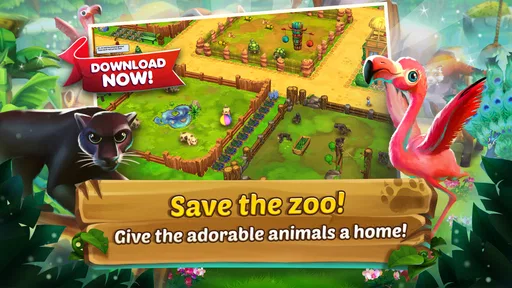
Jumping into Zoo 2: Animal Park was like stepping into a lush, lively ecosystem. The game kicks off with a touching narrative: your dear Aunt Josephine has left you her small zoo in her will, and it’s now your job to transform this humble abode into a thriving sanctuary.
The tutorial is smooth and engaging, guiding you through the basics without feeling like a chore. From building enclosures to ensuring your animals are happy and healthy, the game gently nudges you to explore its many facets. Trust me, you’ll be hooked in no time!
Building Your Dream Zoo
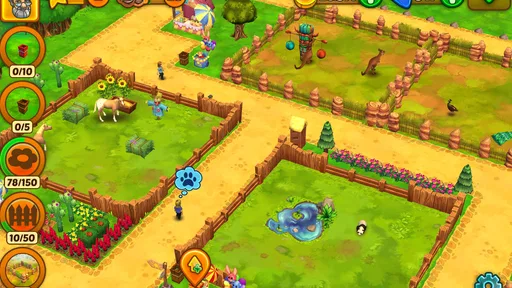
This is where the magic happens. With a wide variety of enclosures and decorations at your disposal, you can let your creativity run wild. Want to create a tropical paradise or perhaps a serene savannah? The choices are endless.
Worth Reading Before You Choose

Baby Panda World Brings Quick Play to Modern Phones, but Its Game Library Feels Busy

ESPN’s Live Game View Makes Following Close Games Easier

QuizzLand Review: A Good Fit for Short Trivia Breaks, Not Every Player

Basketball Stars: Multiplayer Is Fast, but Can It Recover When Matches Go Wrong?

WEBTOON Turns Phone Updates Into a Better Reading Routine

Link to Windows Runs on Shared Habits, Not Social Feeds
What really caught my eye was the attention to detail. Each enclosure can be customized to suit the needs of its inhabitants. So, whether you’re housing lions or lemurs, you can ensure they live in style. And yes, I did spend a little too much time perfecting my flamingo lagoon!
That creative freedom is also where I found it useful to slow down. If you enjoy arranging spaces, it is tempting to spend resources on appearance as soon as a new option becomes available. I found it more satisfying to decide what I wanted the next part of the zoo to do before placing decorations. A simple personal rule—make one functional change before making a purely visual one—can help keep the park moving forward without taking away the fun of designing it.
There is a trade-off between a layout that looks appealing to you and one that is easy to manage. When you are deciding where to add something, consider whether you will still be able to move around the park and find the area you need quickly. That little bit of planning matters most if you tend to open the game for a short check-in rather than a long decorating session. I would treat each expansion as a small project instead of trying to make the whole zoo perfect at once.
Meet the Animals
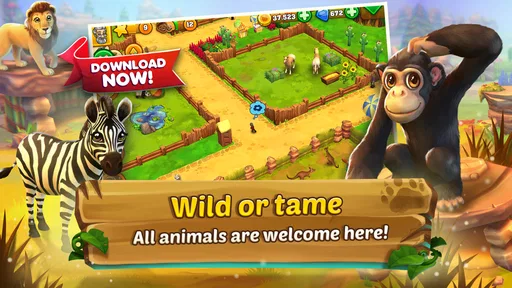
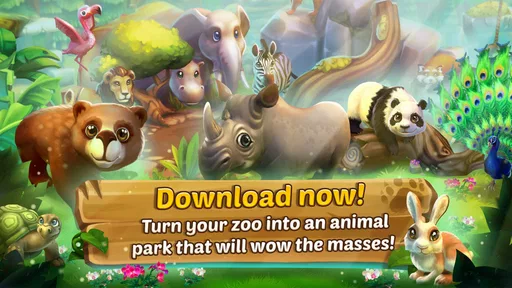
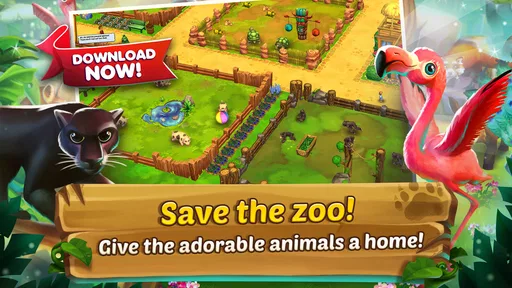
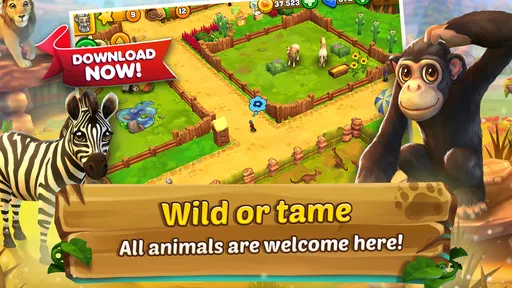
The heart and soul of any zoo are its animals, and Zoo 2 doesn’t disappoint. From cuddly pandas to majestic elephants, each creature is beautifully animated, bringing life to your park.
Interacting with the animals is a treat. You can feed them, play with them, and even breed them to welcome adorable offspring. Watching a baby giraffe take its first steps? Absolutely priceless.
The animal focus gives the game a warmer feel than a zoo-management experience that treats every decision as a business calculation. I would recommend it to someone who wants the animals themselves to be part of the appeal, not just decorations around a set of management menus. At the same time, players who prefer a realistic simulation with detailed operational controls may find the approachable, playful presentation less involving than they want.
For a casual routine, I’d choose one or two animal areas to check first rather than wandering through the entire park every time I open the game. That keeps a quick visit focused: look after the animals that need attention, then decide whether there is time to take on another task. It is a small habit, but it makes a sprawling park feel less like a list of chores and more like a place you are gradually shaping.
Challenges and Rewards
Running a zoo isn’t all sunshine and rainbows, and the game cleverly introduces various challenges to keep you on your toes. Whether it’s expanding your space, managing visitor satisfaction, or hosting special events, there’s always something to keep you busy.
Completing tasks and challenges rewards you with coins and diamonds, which are crucial for unlocking new animals and features. Pro tip: Keep an eye on your resources and plan your upgrades wisely!
My most useful approach is to avoid spending just because I can afford a small upgrade. First, I check what I am trying to accomplish next, then I decide whether the purchase helps with that goal or simply looks appealing in the moment. This is especially helpful when a task asks for several steps: doing the steps in a sensible order can prevent a decorative choice from delaying progress on something more useful.
There is also a patience question here. If you like seeing a long project advance a little at a time, the reward cycle can be satisfying. If you want every new animal or improvement immediately, the combination of resource management and optional purchases may become frustrating. I would not treat spending as a requirement, but I would be honest with myself about whether waiting for progress suits the way I like to play.
Social and Competitive Elements
What’s a game without a little friendly competition? Zoo 2 allows you to connect with friends and other players worldwide. You can visit each other’s zoos, exchange gifts, and even compete in leaderboards.
The social aspect adds another layer of fun, and it’s always inspiring to see how other players design their parks. Plus, sharing tips and tricks with friends only adds to the experience.
Visiting another zoo can be useful even if you are not interested in competing. I like the idea of treating other parks as inspiration rather than a standard I have to match: notice a layout choice you enjoy, then adapt the idea to your own space and priorities. That makes the social side helpful for creative players without turning every visit into a comparison of progress.
If you would rather play privately, the main appeal still comes from building and tending your own park. The social features are an extra, not the only reason to start. I would also keep expectations sensible: seeing another player’s setup can offer ideas, but it does not automatically tell you which choices are best for your own goals or resources.
When Something Feels Stuck
When a task does not seem to move forward, I would first reread what it is asking for and check that I have completed each part, rather than repeatedly tapping around the zoo. In games with several objectives, it is easy to focus on the most visible action and overlook a different requirement. Taking a moment to identify the exact next step is a better first move than spending resources in the hope that something will change.
If the game appears slow or unresponsive, I would separate a temporary problem from a gameplay wait. Give the current screen a moment, avoid repeatedly pressing the same control, and then try closing and reopening the game if it remains stuck. Before doing anything more disruptive, make sure the device has a stable connection if you are using an online feature. These are general checks, not a promise that every issue has the same cause.
For a player returning after a break, a useful recovery routine is to take stock before making changes: look at the current objective, note which resources you are trying to preserve, and choose one manageable task to resume. That is less overwhelming than trying to remember every plan you had when you last played. I would avoid deleting the game or clearing saved information as an early troubleshooting step, since that can risk losing progress in games that store it locally or rely on account access.
Setup Checks and Everyday Play
The game’s current version is 13.4.3, and the listed minimum operating system is 7.1. Before installing, I would check that the device meets that requirement and has enough free space for the download and normal use. If an installation stalls, a restart and a fresh check of the connection are sensible first steps; changing several settings at once makes it harder to tell what helped.
A realistic way to fit the game into a day is to open it during a quiet break, handle the animal care or task that is most pressing, and leave larger building decisions for a time when you can focus. That division keeps a short session from becoming an accidental spending spree or an unfinished redesign. It also suits the game’s gradual development better than expecting every visit to deliver a major milestone.
For younger players, the Everyone content rating makes the game broadly accessible, but I would still talk through optional purchases before handing over a device with payment access. The wide price range means a child should understand that free entry does not mean every in-game item is free. A simple household rule—ask before making any purchase—can prevent an enjoyable zoo-building session from turning into an unexpected bill.
Graphics and Sound
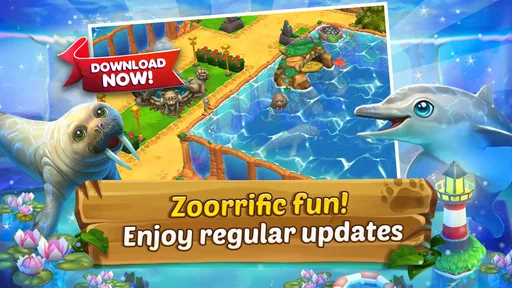
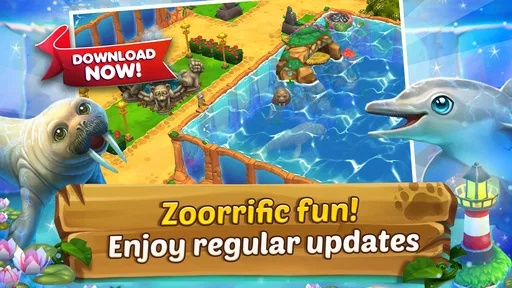
The visual appeal of Zoo 2 is one of its strongest suits. The vibrant colors and detailed graphics make the game a feast for the eyes. Each animal and environment is crafted with care, making it a joy to watch your zoo come to life.
The sound effects and background music are subtle yet effective, enhancing the immersive experience. It’s the kind of game where you can lose track of time, simply enjoying the sights and sounds.
The presentation is a good match for the relaxed management style: the park feels like a place to spend time in, not merely a screen of numbers to optimize. That can be a real strength when I want something gentle after a busy day. The reverse is true if you mainly want tight, information-dense controls or a brisk challenge; the game’s appeal is more about caring for and shaping a lively space than racing through demanding action.
Who Will Enjoy It—and Who Might Not
I would point a friend toward Zoo 2 if they enjoy animal-focused games, gradual progression, and the chance to make a personal-looking park. It is also a natural choice for someone who wants a game they can revisit in short bursts and whose reward comes from seeing small changes add up. The mixture of quests and creative decisions gives those players more to do than simply decorate an empty space.
I would steer a friend elsewhere if they dislike waiting, resource planning, optional purchases, or games that invite frequent check-ins. Someone looking for a story-led adventure with a firm ending may find the ongoing zoo routine less compelling. Likewise, a player who wants deep simulation may prefer a more complex management game, while someone who wants instant action would be better served by a faster-paced adventure. Zoo 2 sits in the gentler middle ground: more involved than a simple animal viewer, but not something I would choose for intense strategy.
Compared with the usual alternatives, its distinctive draw is the combination of animal care and hands-on park design. A pure decorating game might give more attention to arranging a space, while a conventional strategy title may put efficiency and optimization first. Here, I found the charm comes from moving between the two: tending animals, completing objectives, and then making the zoo feel more like my own. That balance is appealing, though it may not satisfy someone who wants either side taken to an extreme.
A Wildly Entertaining Experience
Overall, Zoo 2: Animal Park is a delightful blend of strategy, creativity, and fun. Whether you’re a seasoned gamer or just looking for a relaxing way to unwind, this game has something for everyone.
The combination of engaging gameplay, charming animals, and the ability to design your dream zoo makes it a standout title. So, if you’re ready to embark on a wild adventure, head over to the app store and give Zoo 2 a try. Trust me, your inner zookeeper will thank you!
My practical verdict is that I would try it if the idea of returning to a growing zoo sounds pleasant, and I would keep the first session focused on learning the routine instead of trying to perfect every corner. The free entry makes it easy to see whether the pace suits you, but I would decide on a spending limit before optional purchases become part of the experience. For me, the best reason to stay is the satisfying blend of animal care and personal design; the clearest reason to skip it is wanting immediate progress without resource decisions.
Pros
- Engaging and interactive gameplay.
- Beautiful graphics and animations.
- Regular updates with new content.
- Easy to learn for all ages.
- Social features for connecting with friends.
Cons
- Requires internet connection.
- In-app purchases can be pricey.
- Progress can be slow without spending.
- Occasional bugs and glitches.
- Limited offline functionality.
FAQs for Zoo 2: Animal Park
What is Zoo 2: Animal Park about?
Zoo 2: Animal Park is a captivating simulation game where players take on the role of a zoo manager. Your mission is to transform a small, inherited zoo into a thriving animal sanctuary. With a wide variety of animals to care for, engaging tasks, and vibrant graphics, it offers an immersive experience for animal lovers and simulation enthusiasts alike.
Is Zoo 2: Animal Park free to play?
Yes, Zoo 2: Animal Park is free to download and play on both Android and iOS platforms. However, the game includes in-app purchases that can enhance the gaming experience. These purchases are optional and can be used to acquire special items, speed up progress, or expand your zoo more quickly.
What are the system requirements for Zoo 2: Animal Park?
To run Zoo 2: Animal Park smoothly, an Android device should have at least Android 5.0 or higher, while iOS devices require iOS 10.0 or later. The game is optimized for both smartphones and tablets, ensuring a seamless experience across different devices. Make sure to have sufficient storage space for updates and additional content.
Can I play Zoo 2: Animal Park offline?
Zoo 2: Animal Park requires an internet connection to play. This is due to its interactive features, such as real-time events, social interactions, and updates. An active connection ensures you can access the latest content, participate in community events, and maintain progress across devices.
How does the social interaction feature work in Zoo 2: Animal Park?
In Zoo 2: Animal Park, players can connect with friends, visit each other's zoos, and exchange gifts. This social feature enhances the gaming experience by fostering a sense of community. You can also participate in group events or challenges, adding a collaborative element to the zoo management experience.


